Travel Guide with beautiful photos and exciting descriptions of the most amazing and unique places in Baltic states and Europe.
Articles by "Latvia building"
Rāda ziņas ar etiķeti Latvia building. Rādīt visas ziņas
Travel Guide with beautiful photos and exciting descriptions of the most amazing and unique places in Baltic states and Europe.
Huge, palace-like Neoclassicism and Neoeclecticism building, often compared with a white ship, was built in 1936 as a state's hotel - one of the most modern in Europe. In Soviet times, there was a sanatorium. Nowadays the building itself is renovated and it's planned to renew hotel there, but the nearby area today is still run-down (although gradually being redeveloped).
Travel Guide with beautiful photos and exciting descriptions of the most amazing and unique places in Baltic states and Europe.
Unusual structure - five huge, semi-rounded hangars (Zeppelin hangars from World War 1), built in 1930ies in Art Deco style and nowadays houses the largest roof-covered market in Europe, probably the only market "for the masses" which can still compete with shopping malls (in this part of the world).
Travel Guide with beautiful photos and exciting descriptions of the most amazing and unique places in Baltic states and Europe.
The 8th largest radio telescope in the world hides in the forests of North-Western Latvia, Ventspils region. The top secret Cold War structures (three towers, now two of them left) were originally intended to listen enemy's radio communications, nowadays it's being used to listen to sounds from cosmos, searching for the extraterrestrial intelligence.
Travel Guide with beautiful photos and exciting descriptions of the most amazing and unique places in Baltic states and Europe.
Riga Castle (Rīgas pils) was firstly built around 1340. It was the seat of Livonian Order who ruled Latvian territory back then. The castle is not the first and original castle of Riga city - that one was demolished by Rigans themselves when they rebelled against Livonian Order and started a war (around 1300). Rigans lost the war and in result, as a term of peace agreement had to build the new castle for Order in behind town borders, in new place.
Riga castle has experienced several destructions and architectonic changes throughout the history, it has been severely damaged also in the Latvian Independence War (1918-1920). Last destruction was done by fire in the process of castle reconstruction, in 2013. The reconstruction is still on-going, but castle is again functioning as the residence of the president of Latvia.
Travel Guide with beautiful photos and exciting descriptions of the most amazing and unique places in Baltic states and Europe.
Christ's Birth Orthodox church is one of four Orthodox cathedrals in Latvia, built at the end of 19th Century. As it's said back then it was the most expensive building in Riga. It luckily survived both World Wars but Soviet power closed and partially demolished it (sawn down the crucifixes, re-melted the bells) and in a symbolic move as a science victory over religion converted it into a planetarium.
Reconstruction of the building has been on-going since the end of 90ies. The church has now also gold-plated cupolas (at first, they were blue!).
Travel Guide with beautiful photos and exciting descriptions of the most amazing and unique places in Baltic states and Europe.
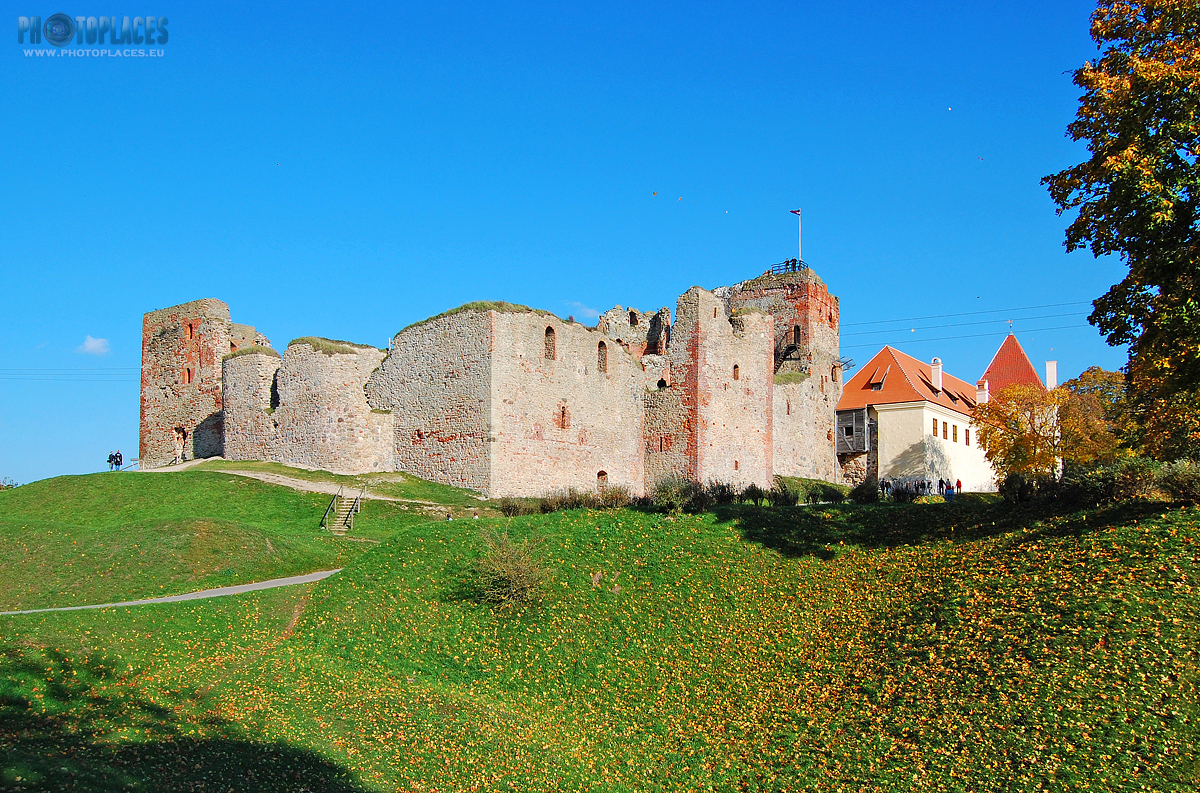
The greatest tourism asset of Bauska is Bauska castle and Bauska nature park around it.
Bauska castle was originally started to built in 15th Century and construction continued till the end of the 16th century. The old section of the castle featured a great watch tower, 3.5 meter thick walls, a prison under the tower, a garrison and a drawbridge at the gates. Nowadays the castle consists of two parts - the ruins of an earlier castle and a later palace.
The castle have gone through decades long renovation works which are finished now. Bauska castle museum is one of the most visited museums in Latvia - some 170 000 people visits it every year. It's just 1/3 less than seemingly much more popular Rundāle palace museum (10 km from Bauska) which is the most visited one in Latvia with around 240 000 visitors per year. Bauska castle offers also an observation tower where one can get nice views over surrounding nature park area.
Travel Guide with beautiful photos and exciting descriptions of the most amazing and unique places in Baltic states and Europe.
| MAIN FACTS | |
|---|---|
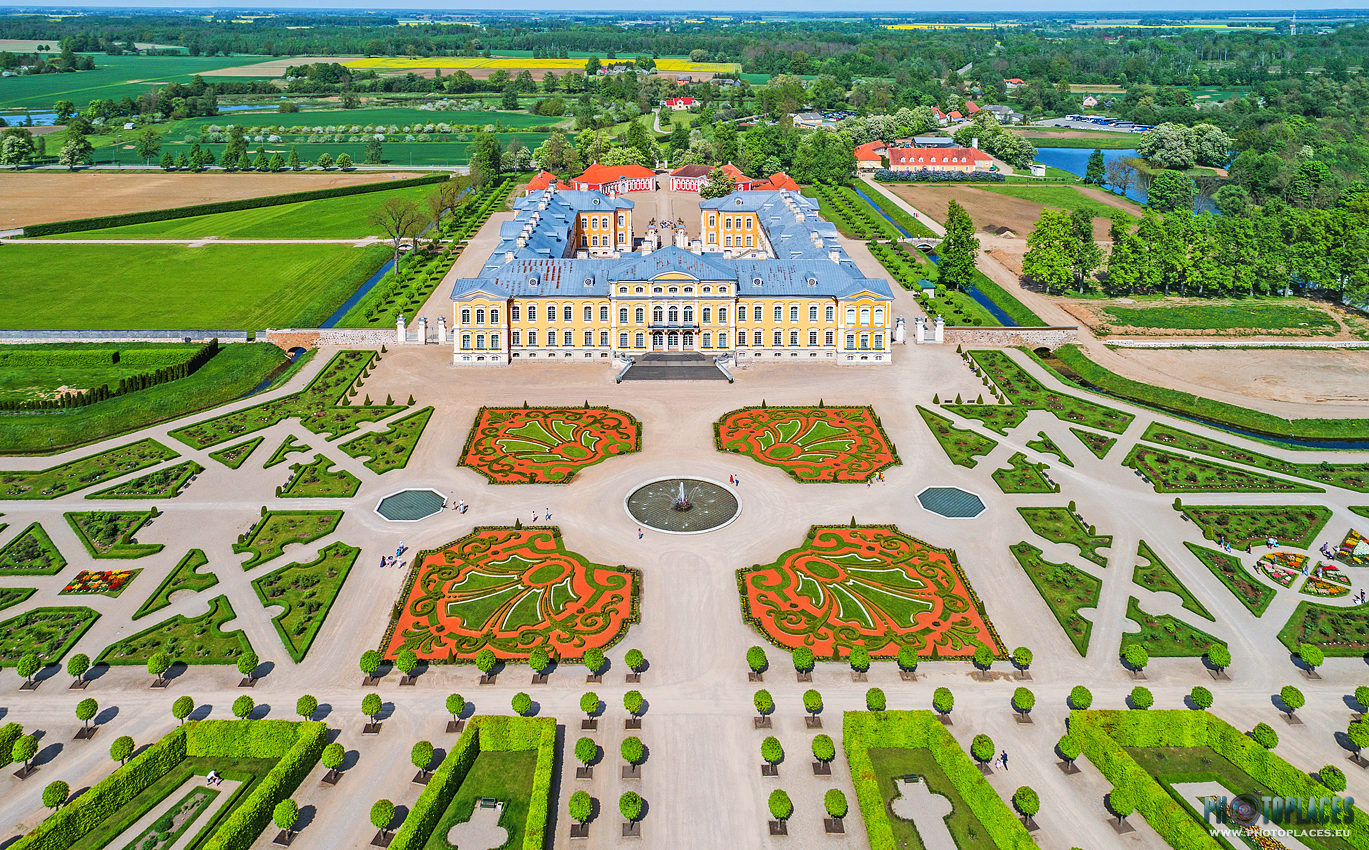
| LOCATION | Latvia, Rundale municipality |
| ARCHITECTURE | Baroque, Rococo |
| BUILT | 1768 |
| ARCHITECT | Bartolomeo Rastrelli |
| ROOMS | 138 |
| RATING (8,89/10) | ![]() |

Main facts
Rundale palace was started to build in 1736 by Ernst Johann von Biron, Duke of Courland. It's construction works went fast, however got interrupted because the Duke fell into disgrace by the rulers of Russian empire and was exiled to Siberia. However he got back years later, the construction was resumed and the palace was finished in 1768. Rundāle palace architect is famous Italian Bartolomeo Rastrelli - the same one who has designed also Winter palace of Saint Petersburg. Rundale palace has been several times destroyed since it's completion. It has been especially "favoured" by military personal - Napoleon army resided (and demolished the palace) there in 1812, the same was done by Germans and Russians (commanded by Pavel Bermondt) a century later. Only in 1972 Soviet power recognized the importance of Rundale palace and the renovation works gradually started. They were finished in 2015 (of course, additions and improvements are and will be still going on also further).The man with a passion
Almost all the time since renovation started (from 1976), the palace was led by it's legendary director Imants Lancmanis - a painter, art scientist and very enthusiastic professional. As he has told, his love to Rundale palace started as a deep desire to escape the bleak reality of soviet Latvia - he saw such an escape in the royalty atmosphere of the palace. It's quite sure - Rundale most likely wouldn't been revived yet (or the renovation wouldn't been done in so professional way) without Lancmanis lifetime work and determination."Versailles of the Baltics"...
...that's how Rundale palace is often nicknamed and this time it's not just another "wannabee" label without any relation to the facts and history. Rundale palace construction was indeed inspired by Versailles palace example which was an etalon of royal residences in 18th Century Europe. Of course, Rundale is much smaller and less ornate than Versailles. But that's partly because......the birth of younger sister
Just two years after construction of Rundale was initiated, von Biron started to build yet another, even larger palace just some 40 kilometres to north-west, in Jelgava town. He intended Jelgava as his central residence, while keeping Rundale as a summer residence. So, larger part of Biron's resources were invested in Jelgava palace, even some materials, decorations who were originally intended for Rundale palace, were relocated to Jelgava. Thankfully, both palaces got finished. It's interesting that nowadays, despite of Jelgava palace being larger and also with more decorative exterior than it's sister in Rundale (Rastrelli was the architect of both), Rundale is the one which has turned out far more succesful and famous. Of course, it's mainly thanks to the beautiful French-style garden and also more elaborated interiors which Jelgava palace lacks. But there's something magical about the palace itself too - yes, Rundale may seem small and not so luxurious but it's sophisticated architectural language and harmonic appearance emits nobility like few other palaces do.
BUY RUNDALE PALACE FULL SIZE PHOTOS
Google Map:

Travel Guide with beautiful photos and exciting descriptions of the most amazing and unique places in Baltic states and Europe.
Alberta street 2a, built in 1906, is one of most recognizable Art Nouveau buildings in Riga, representing the Ecclectic Decorative Art Nouveau style which was actively developed by architect, engineer Mikhail Eisenstein. In this building, world-famous philosopher Isaiah Berlin has lived his first years of life (he was born in 1909). Excessive use of facade ornamentation is a hallmark of Eisenstein's works, in this case he has even designed an "empty" 5th floor (the empty window openings which offers view to the sky) which adds a lovely accent to the building. Tourists also love to take selfies with sphinkx sculptures which are situated in the front of the building's entrance, on the pavement.


Travel Guide with beautiful photos and exciting descriptions of the most amazing and unique places in Baltic states and Europe.
Art Academy of Latvia is one of those Riga buildings which looks like palaces (due to it's size and ornate facade, not a historical use). It was built in the beginning of 20th Century as a Riga Bourse commercial school. The owner wanted exactly Neo-Gothic architecture, because it would represent Riga as a historical Hanseatic city - so the prominent architect Wilhelm Bokslaff made such. Art academy started to operate in the building in 1940.
Abonēt:
Ziņas (Atom)