Travel Guide with beautiful photos and exciting descriptions of the most amazing and unique places in Baltic states and Europe.
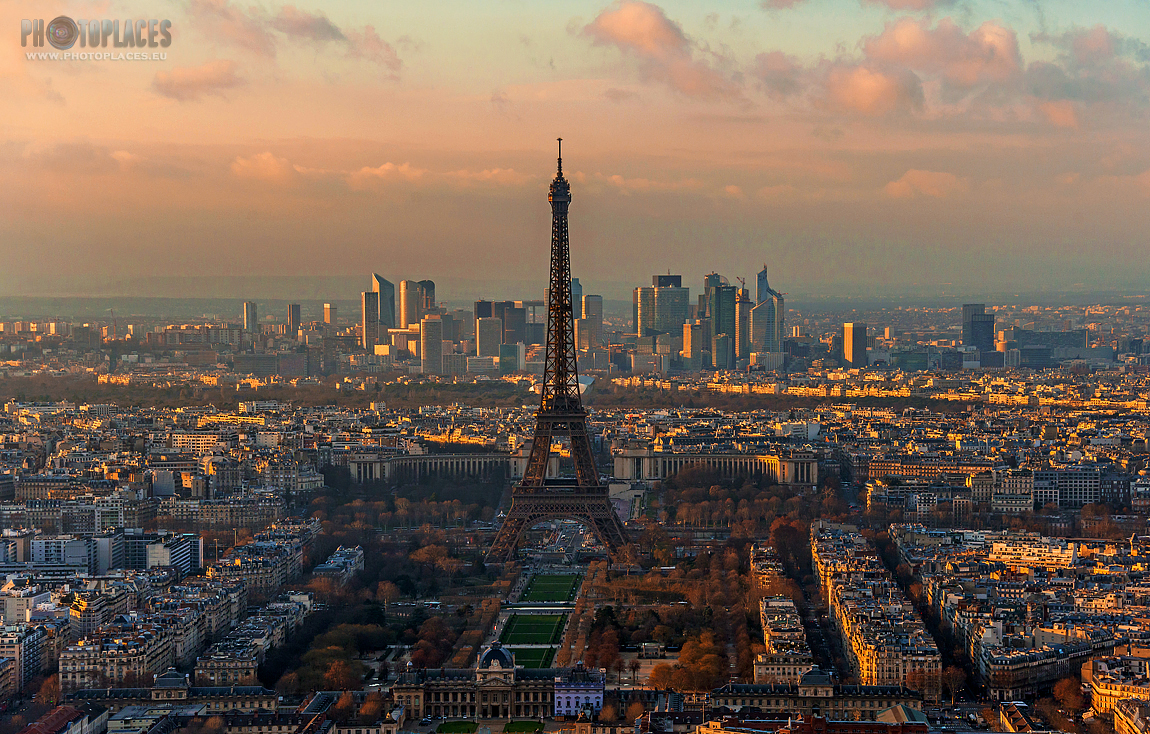
As one of the largest and the most dense city in Europe, and being so rich in history and culture, Paris is the real paradise for urban explorers and photographers - it offers numerous architecture masterpieces and countless interesting cityscapes. Several days are needed just to visit all the top-places but there are so many more undiscovered gems in Paris that you can visit the city each time as the first.
The beauty or the beast?
| MAIN FACTS | |
|---|---|
| POPULATION | 2,140,526 (2019) |
| AREA | 105 sq. km |
| TOURISTS | 24 MIO (2018) |
| FOUNDED | 3rd Century B.C.E. |
| ARCHITECTURE | Gothic, Classicism, Renaissance, Hausmann |
| RATING (9,7/10) |  |
Paris is a very multicultural city. Lower qualification jobs are served almost only by immigrant workers (but that's a common sight in almost any larger Western, Northern or Southern European city). Also in the residential districts of suburbs there lives almost only immigrants. One can observe
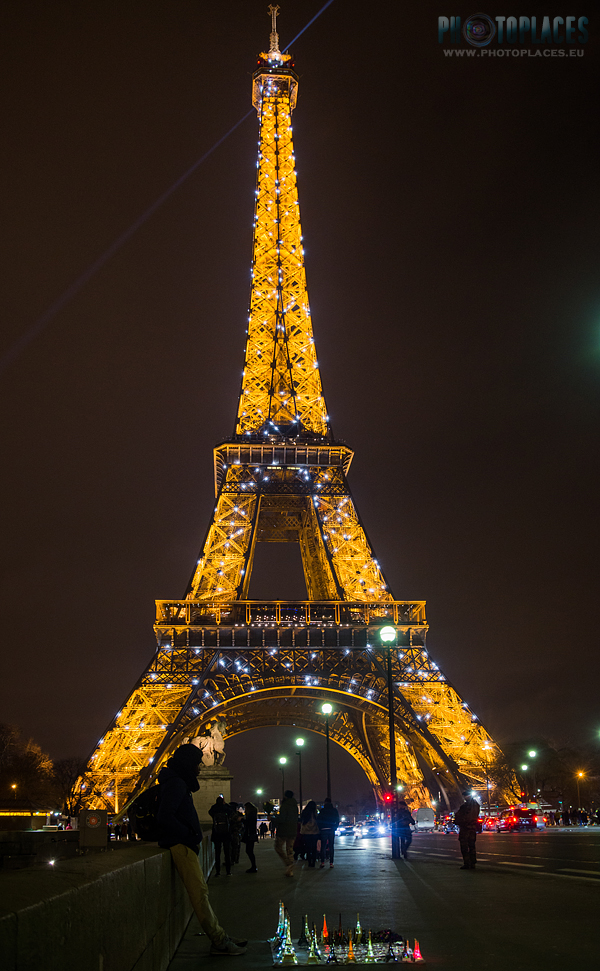 |
| Souvenir seller with toy Eiffel towers and the real one in the moment of 20 000 LED lights show; two soldiers patrols the street near by |
The most unpleasant experiences in Paris with locals are related to those obtrusive people who tries to cheat tourists in one way or another. They have grown in numbers in recent years very considerably. The same goes for beggars who are much more in Paris now than ten years ago. And they sleeps on the mattresses in the middle of pavements or even next to the crossing of large streets - and it seems noone even cares about it. Hard to say - is it the result of economic crysis or migrant crysis (or both) - but that's one face of Paris which has really turned more ugly.
The fears of terrorism in Paris isn't too noticeable anymore. The emergency which lasted for 2 years has been canceled and only at the Eiffel tower there were some intensified care of social safety visible - in the form of two armed men with machine guns.
Also the statistics shows that Paris image has overcame the troubles of terrorism. After the dreadful events of 2015, the city's tourist numbers shrinked in the next years, but in 2018 they returned to a record high threshold - more than 24 million tourists stayed overnight in city's hotels, hostels and other accomodation places.
Also the impact of "the yellow vests" is overstated - actually a usual tourist most likely won't even notice their presence in the city (even if the protests happens somewhere). It's true that Paris is actually so large city that such an incidents just vanishes there - one has to specially search for these protest events if he wishes so but it's unlikely to get in there by chance. So, the impression that there is a huge, overwhelming disorder in Paris, is created just by mass media, it has nothing to do with reality. It's just like a few small, black dots on the large piece of white canvas - when we see it in TV, it's everything we focus on and everything we associate with Paris (or any other place) at that moment.
Hausmann's city
The overall urban area of Paris is huge - when taking off from Charles De Gaulle airport runway at night, the sea of city's orange lights fills up the panorama almost until the horizon. Paris is an untypical city in teritorial sense - it has chosen to remain administratively divided. Only the very central, historical core of Paris is officially considered as the city administrative area. It stretches about eleven kilometres in Western-Eastern and nine kilometres in Northern-Southern direction and there lives about 2 million people. But the whole continuosly built-up area where lives another 10 million officially isn't a part of Paris - even not it's central business district La Defense which has become Europe's largest single skyscraper cluster, surpassing Frankfurt and London analogues.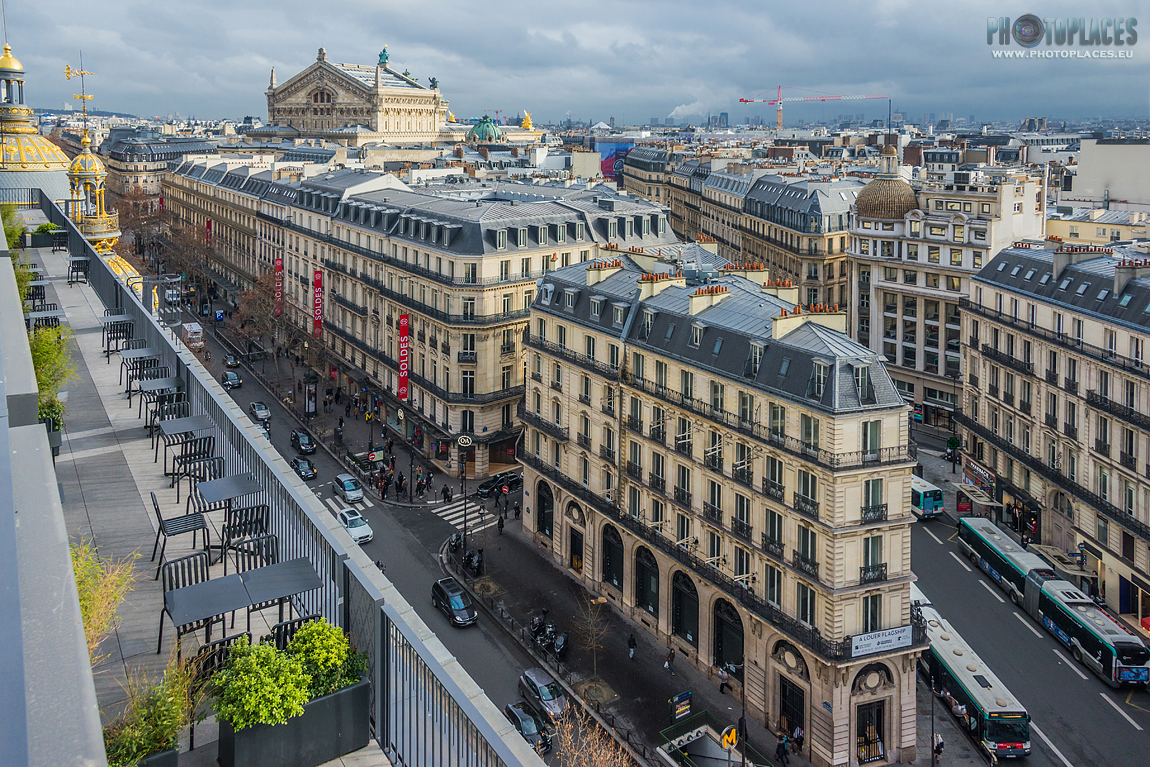
View to Hausmann quarters in Central Paris from the rooftop of Printemps department store
The backbone of Paris architecture, of course, is Hausmann apartment blocks built from the middle of 19th Century. Those seemingly endless quarters with their architectural elegance but also monotonity can be both fascinating and boring (it depends on the observer's mood). In just a few places a remains of medieval Paris can be seen and that provokes a question - how would Paris look today if Napoleon III would have ordered his city planner, baron George Eugene Hausmann to build his new boulevards in a new, empty areas, not in the place of old medieval quarters? Then Paris historical architecture heritage would be even more diverse and valuable - alongside the new Hausmann buildings there would be preserved also one of the largest European medieval cities. Today one could feel temptation to condemn Napoleon III and Hausmann for the demolition of Middle Ages part of Paris however one must remember that back in the 19th Century it seemed like a best solution - the "old" Paris has became overpopulated, dirty, dangerous and infected with diseases but the term "preservation of historical heritage" wasn't invented yet.
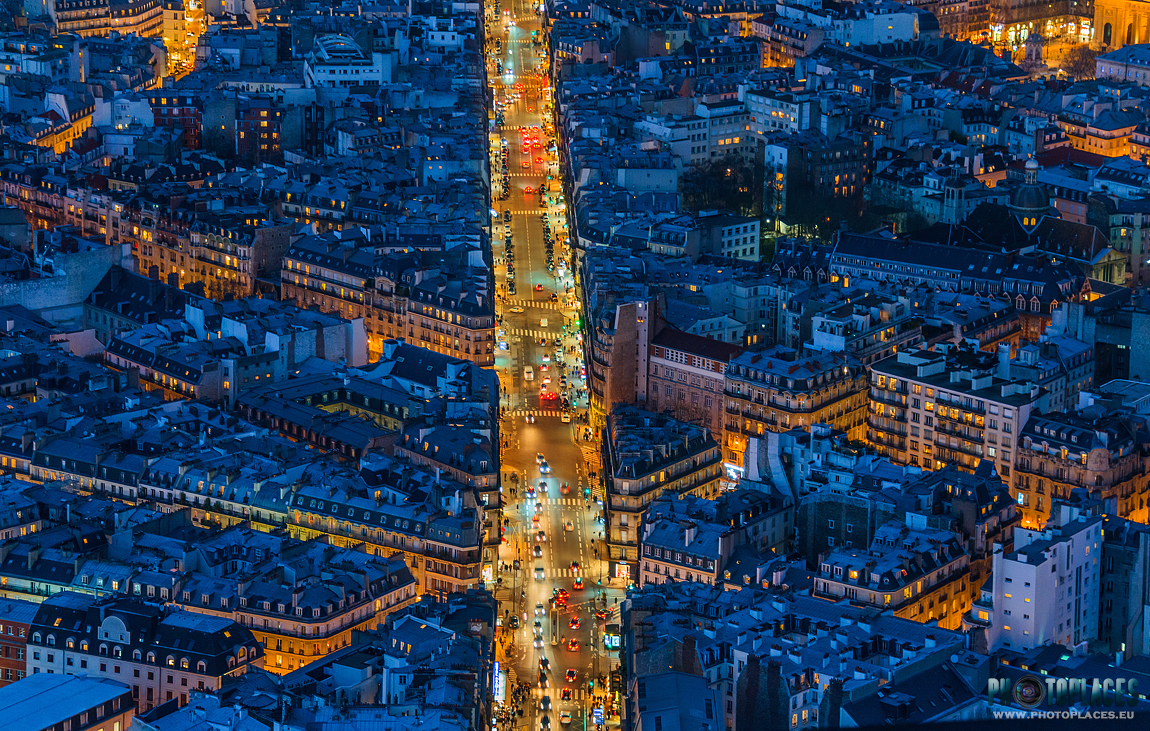
Paris rooftops in blue hour. Also newer architecture tries to fit in between Hausmann style buildings
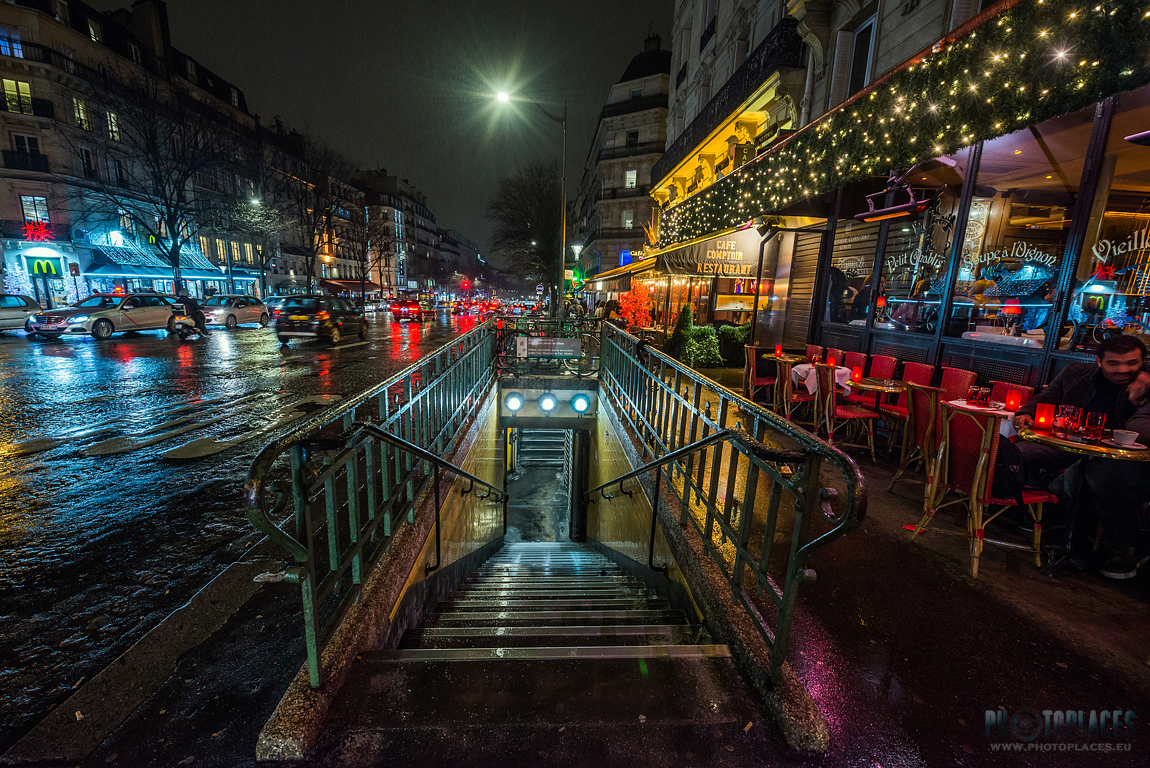
Wide pavements in Paris where there is enough room for both metro entrance and outdoor cafe tables
Hausmann's modernization of Paris ensures the handy functioning of the city still today. The boulevards are so wide that there is enough space for cars, walkers, trees, outdoor cafes, metro entrances, monuments, lanterns, poster poles, vintage style kiosks and all the other cityscape elements which are so characteristic to Paris. The widest streets (it seems they're built later than in Hausmann's era though) has even a separate traffic lanes for deliveries, parking and other practical functions, sometimes also pedestrians walks on these lanes. It has to be added that pedestrians in Paris doesn't respect traffic rules much - if there is no car near by, many of them easily cross the street when the red light is on. Sometimes it creates dangerous situations. The patience of Paris car drivers is remarkable - they usually even doesn't signalize in these cases.

View to the axis of three arches from Louvre museum

Paris from above
The only option to visually comprehend the scale of Paris is to visit it's observation points and see the city from above. Paris is rather flat city but there are several sightseeing platforms in the buildings all around the city. The most famous one, of course, is the Eiffel Tower. However it's very overcrowded and in cold and windy weather it could be hard to stay up there. Better alternative to Eiffel tower is the 210 metres high Monparnasse tower, located just about kilometer away. There are much less people, ticket price is a bit less expensive, it's convenient in any weather because there are glass walls around the top platform (but with a specially designed "windows" for taking unobstructed photos) and a few floors lower also a restaurant floor where to warm up and enjoy some meal. Finally, from Monparnasse tower one can enjoy Paris panorama with the Eiffel tower included in it, while from the Eiffel tower itself that, of course, isn't possible...
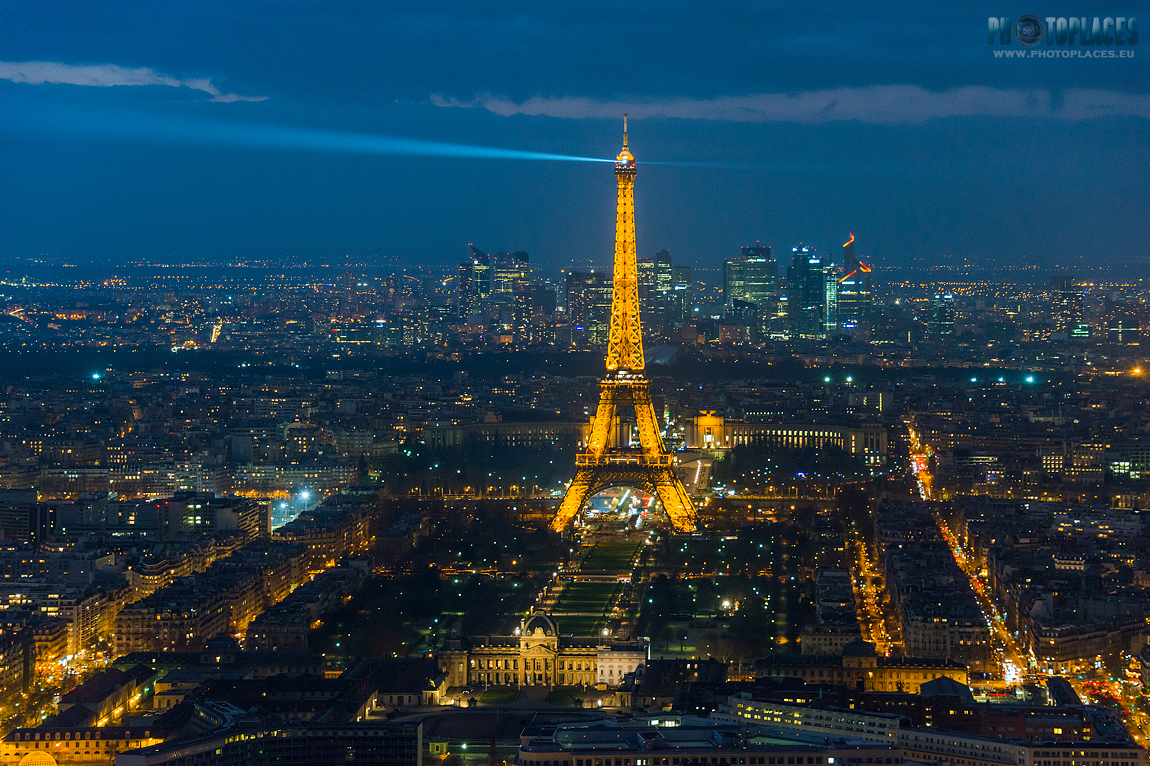
View from Monparnasse tower observation platform towards Eiffel tower
Two cost-free options to see the Paris centre rooftops skyline is from the roofs of famous department stores Galeries Lafayette and Printemps. In Galeries Lafayette the interior is also worth to see - posh, golden atrium (with an interesting admission free attraction on the 4th floor - a glass walkway high above the shopping hall of the first floor). Both roofs offers views to southern side of Paris - too bad the access to views to northern side is closed, so also the hill of Montmartre is left outside the views. Of course, the Montmartre hill itself is another option to see Paris from above (as well as the observation platform of the cathedral of Sacre Coeur).

Galeries Lafayette posh atrium looks like a shopping temple
Probably many people even doesn't realize that also the Triumph Arc offers the possibility to see Paris from it's 50 metres height. The view there is great - over Champs De Elysees and all other 11 wide boulevards which access the arc. One can just wonder how the Indian-style traffic in the ring at the bottom of the arc doesn't end up with an accident in every five minutes. The Eiffel tower is greatly visible and also the mighty skyline of La Defense - Paris central business district - isn't far from there.
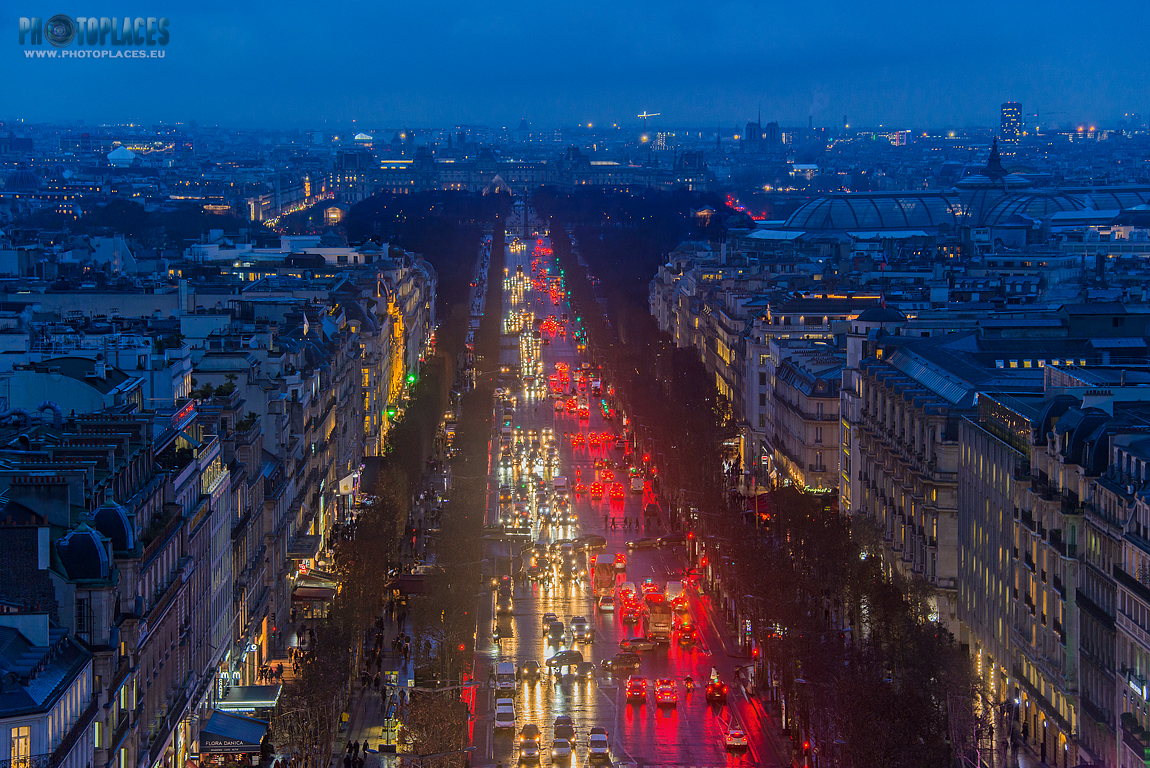

Views from Triumph Arc - Champs De Elysees in the upper photo, view to Eiffel tower side in the second
It would be of no use to describe the most famous landmarks and places of Paris here - who doesn't know the Eiffel tower, Notre Dame Cathedral, Triumph Arc, Louvre, Sacre Coeur, etc.? But perhaps not all people knows about some less popular - but no less interesting sights.
One of such places is "La Promenade Plantee" - unusual model of urban landscape design and great example of how abandoned and degraded transport infrastructure areas can be turned into splendid green zones. Back in the middle of 90ies, four and a half kilometres long promenade was installed in the place of old railway line (it was built in 1859 but stayed unused since 1969). Here pedestrian and bicycle paths have been made, various flowers, bushes and trees planted. Part of the promenade have been lifted above street level which means interesting view perspectives to the city. Even at the end of January this was a beautiful place to walk, it surely must be even more beautiful in spring, summer and autumn. By the way, "La Promenade Plantee" have inspired city planners also elsewhere in the world - in 2009, a similar achievement was completed in New York by reconstructing historical "High Line" railway.
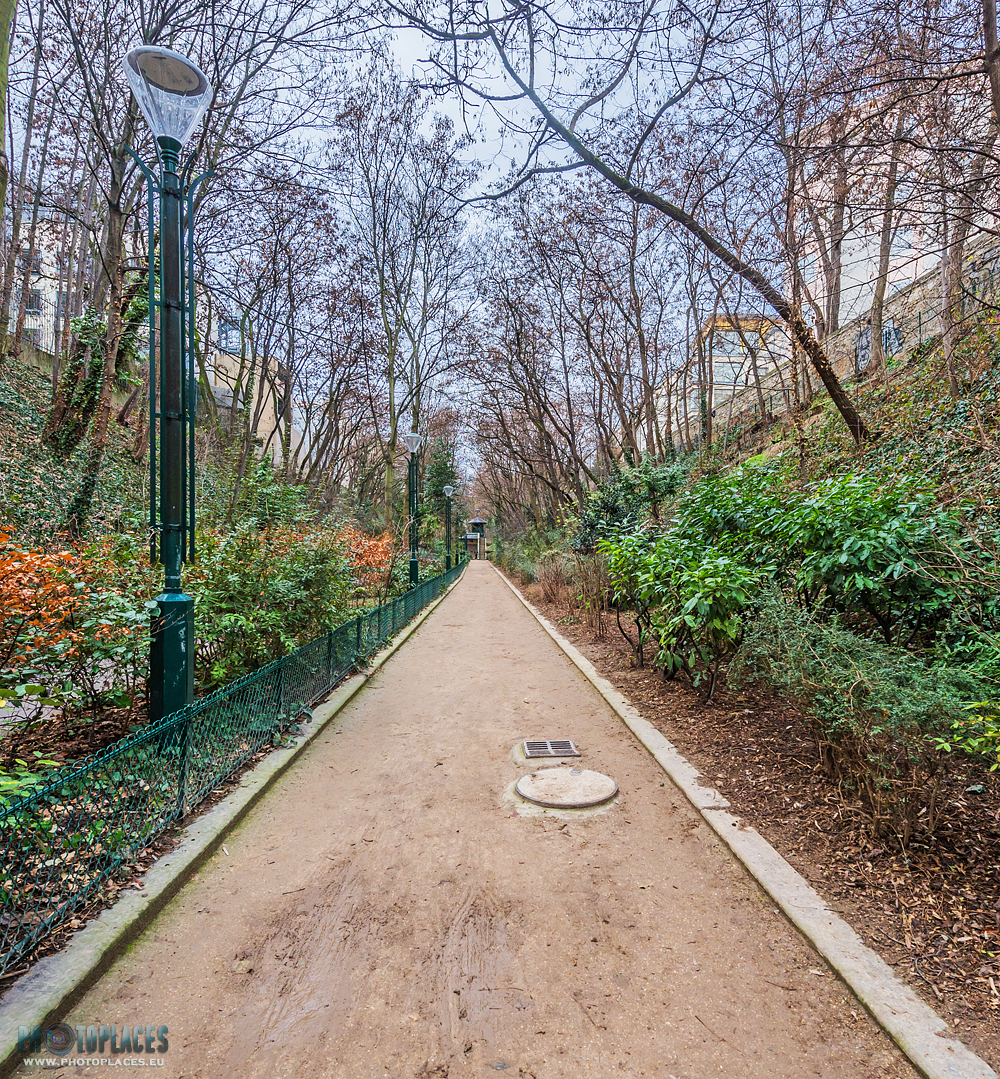
La Promenade Plantee
Did you knew that there is a precise, just a smaller copy of New York's Liberty statue in Paris? Well, actually there are even several of them but the most significant one is located at the Pont De Grenelle bridge. It was set up in 1889 - just three years after the original statue in New York was opened, which, as known, was a gift to USA from France. So, American community in Paris "revenged" by presenting the Parisians 4 times smaller (12 metres high) copy. The statue is located on once artificially made Ile aux Cygnes (The island of Swan), and it can be seen in the composition together with the Eiffel tower.

Statue of Liberty in Paris, at Pont De Grenelle bridge
Lovers of architecture will appreciate the unordinary Cinémathèque Française building, designed by Frank O Gehry. It's located in Bercy district and is another tie between Paris and USA. Initially this building (it was built in the middle of 90ies) was used by American Centre of Paris which main task was to promote the American culture in France. Soon the centre faced financial troubles and it became difficult to maintain the building, thus it was forced to sell it to the government of France. Ministry of Culture established a cinema museum here (with one of largest collections of movies and cinema related items in the world), it also works as a cinema.
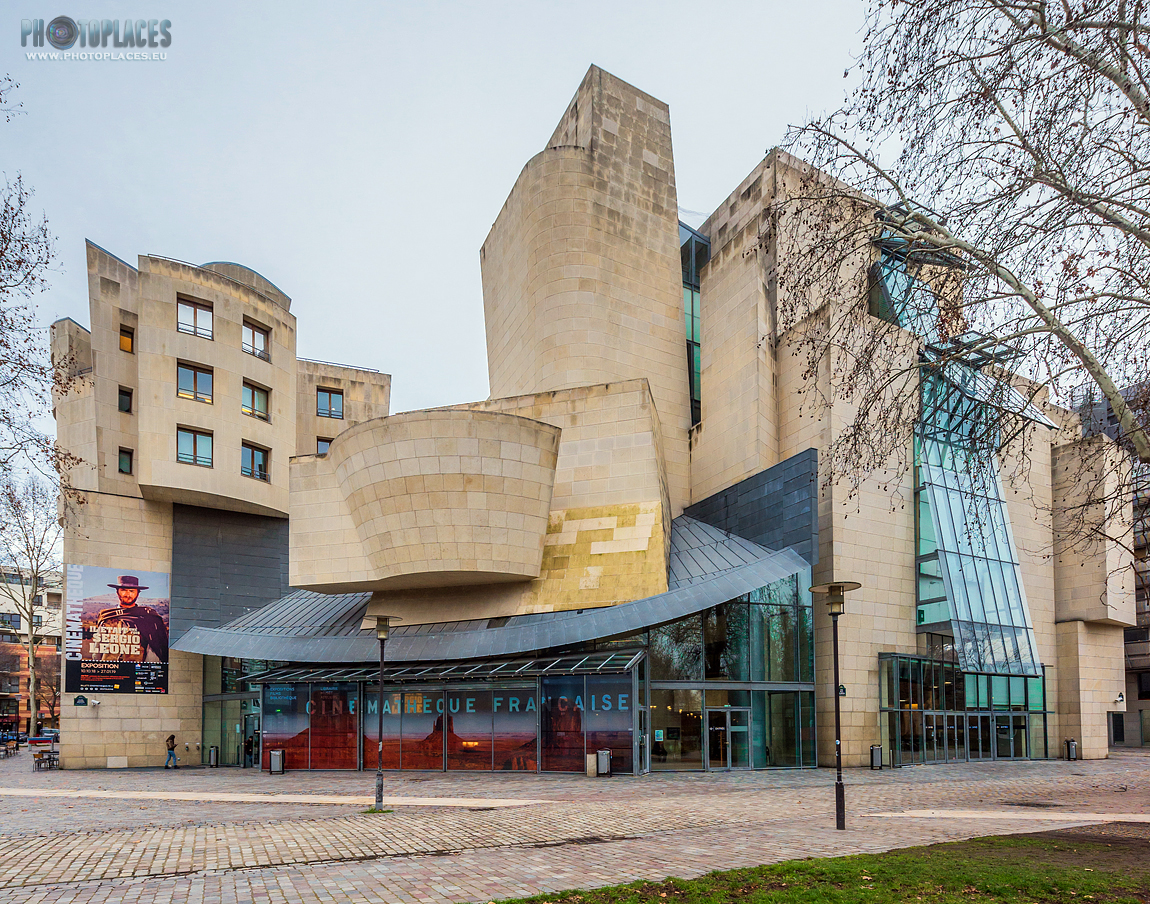
Cinémathèque Française building, an impressive postmodernism architecture by Frank O. Gehry
Paris is blessed with a bit of Art Nouveau touch too. In the whole city, there are quite many examples of this magnificent architecture style but it's really hard to just bump into it accidentally - no, the visiting of Art Nouveau in Paris has to be planned beforehand. Some of the most impressive Art Nouveau buildings in Paris is to be found not far from Eiffel tower - in the 7th district. The Master of this genre in Paris was Jules Lavirotte who designed imaginative and weird buildings with expressive human, animal and plant motifs. But the very first Art Nouveau apartment building in Paris was Castel Beranger, the architect is another "Father of Art Nouveau in France" - Hector Guimard. Also Gare De Lyon train station with it's clock tower belongs to Art Nouveau style.

The first Art Nouveau apartment building in Paris - Castel Beranger
Pont De Bir-Hakeim bridge has became one of the most popular places in Paris to take wedding photo sessions. This unusual and scenic bridge of Industrial revolution times which consists of two levels (the upper deck is for metro trains, the lower one - for cars and pedestrians) became especially famous after appearing in science fiction movie "Inception" with Leonardo Di Caprio in the main role. In just 5 minutes, by crossing the bridge, three wedding pairs were photographed there. Also the entrance to Pont De Bir-Hakeim in Passy district side is visually interesting - there are mighty historical apartment houses with round corner towers on both sides of the bridge.

Pont De Bir-Hakeim, one of most scenic Paris bridges
A little bit out of the official Paris borders, in the Vincennes town (well, basically just another city district) an impressive medieval castle with imposing tower can be found - it's Chateau de Vincennes. This fortress was built in 14th Century for the French galm. Only a part of the original complex has been preserved but it still looks harmonious and completed. Vincennes castle is another proof of the oversaturated and very selectively advertised historical heritage of Paris - while the famous landmarks are being visited by millions of tourists, just a few travelers can be seen here.
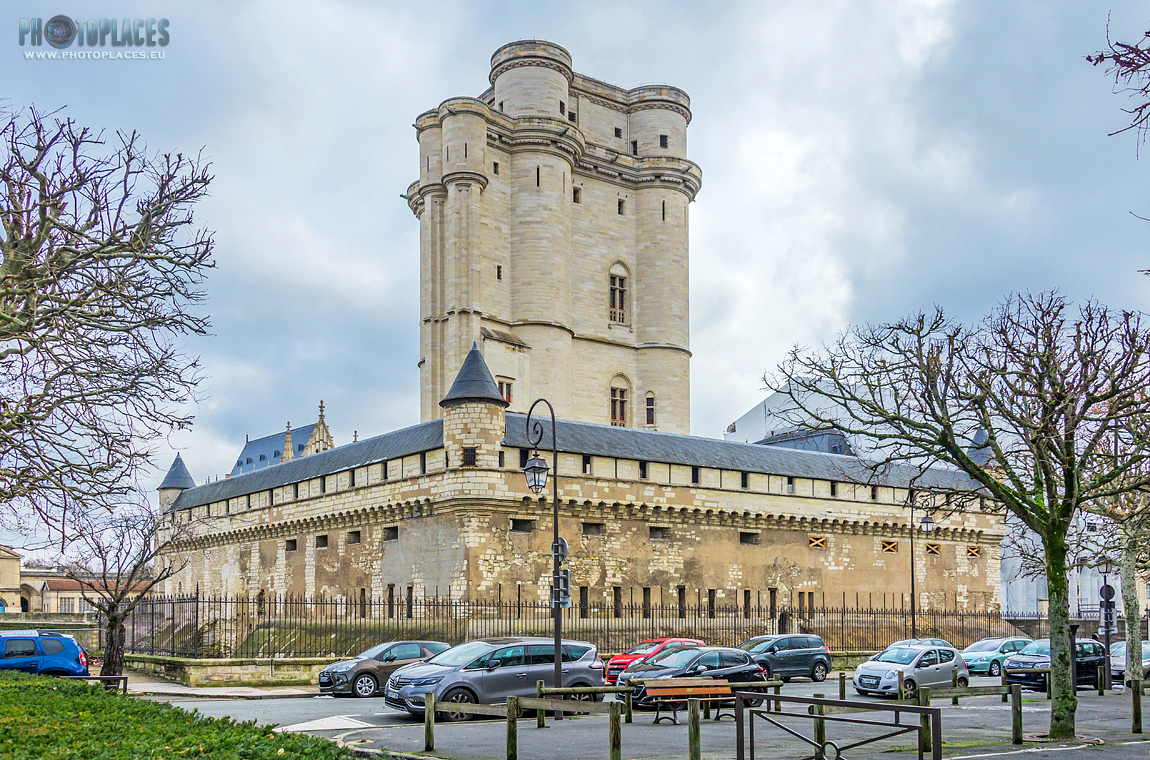
Vincennes castle
Paris neighborhoods are very diverse and each with it's own charm but if Photoplaces had to choose the one most wonderful area in Paris then it would be Montmartre. It's just the most distinctive - the neighborhood occupies the hill, the architecture here is different (mostly smaller, older houses) and it feels rather like a small town/village than huge metropolis. The atmosphere in Montmartre is cosy, artistic and - at times when the tourist hordes are absent like in a rainy winter evening - also calmful. Completely different energy dominates just a bit downhill in neighbouring Pigalle - Paris historical red lights district, where one can observe and feel a bit sinful party atmosphere. Paris central quarters, from Louvre area to Champs Elysees are filled with glamour and elegance, other parts of the city (like the area around Gare De Lyon, Monparnasse tower, etc.) emits stone-cold and a bit depressive authority with massive and huge (either horizontally or vertically) modernism era buildings. Huge buildings are packed even more densely in La Defense quarter but there atmosphere is different - more light, progressive and optimistic, of course, also businesslike, hasty and dynamic.

Cosy small town feeling and observation point perspectives in Montmartre neighborhood
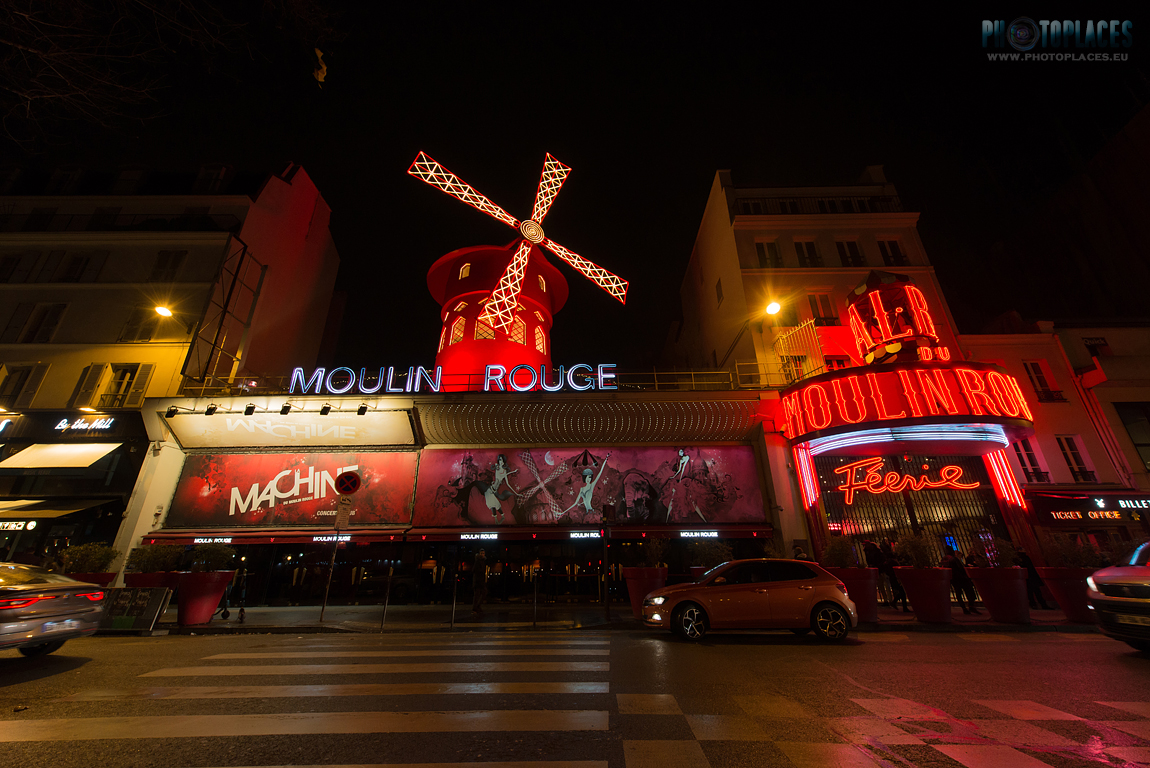
Pigalle area and the legendary Moulin Rouge
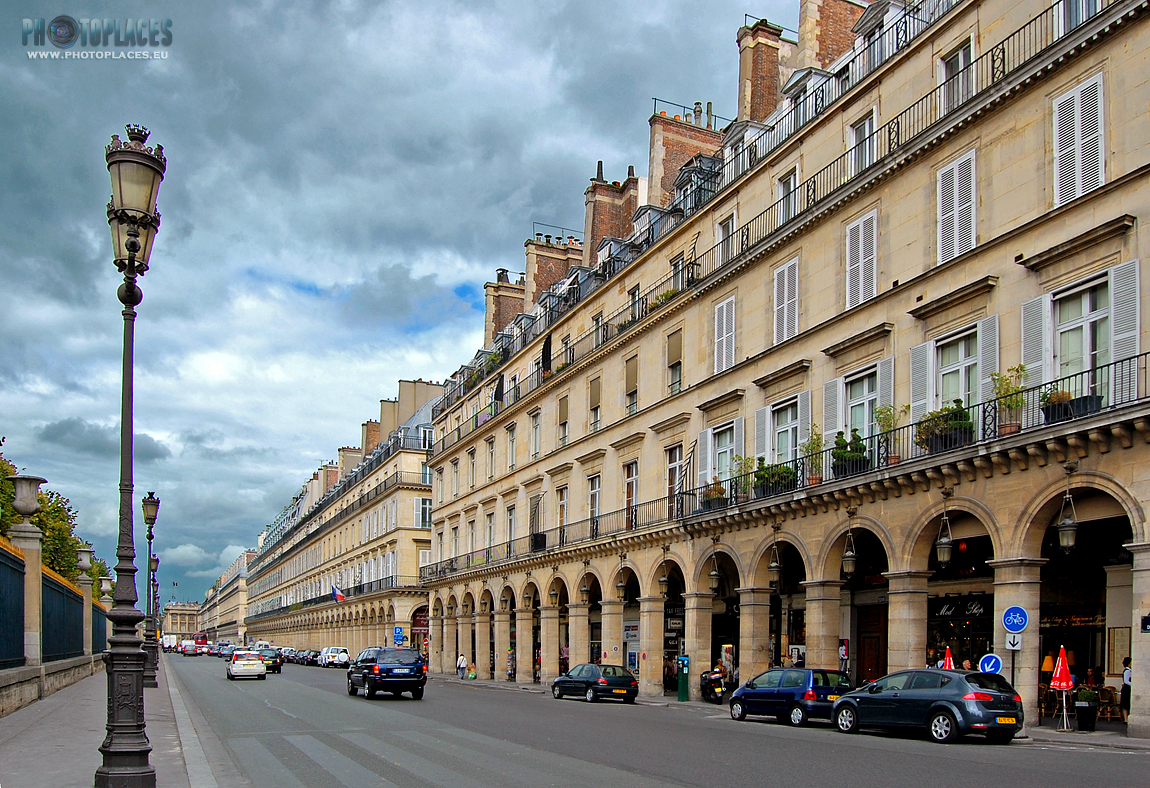
Perfection of symmetry, elegance and monotony in central districts
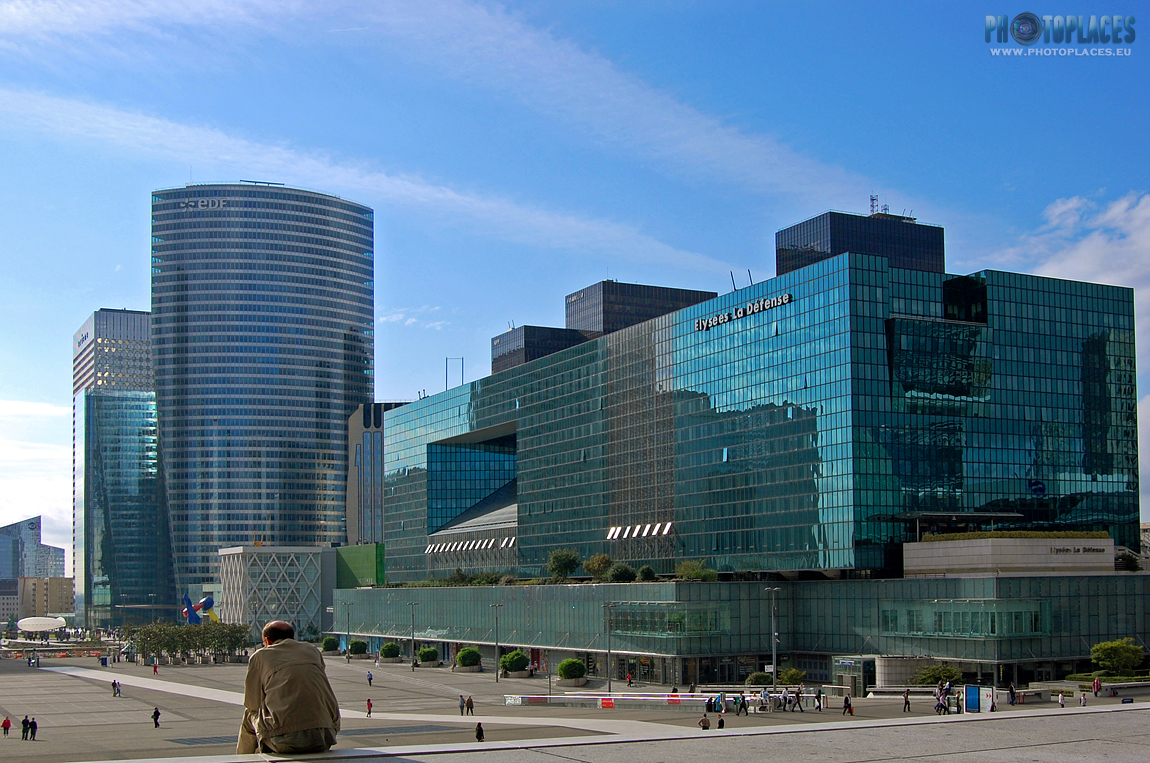
A rare observer looking at the dynamic life pace in La Defense business district
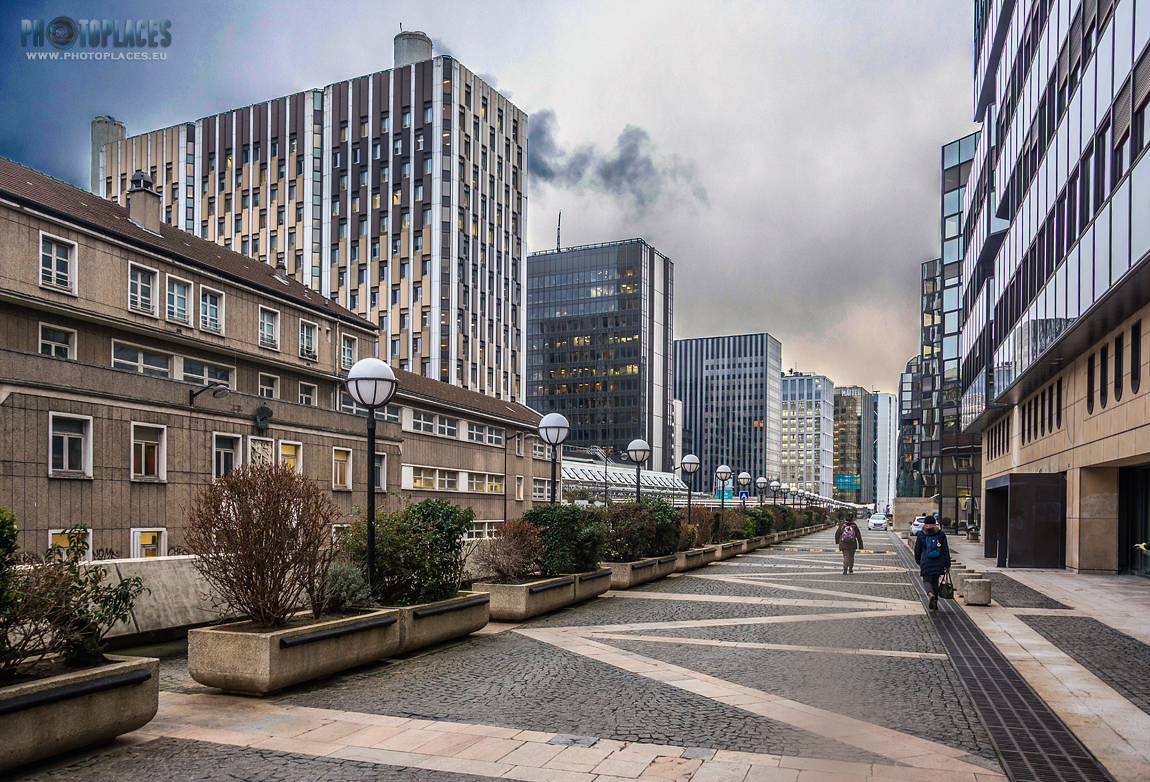
Paris has it's own share of 60ies city planning mistakes. This is area next to Gare de Lyon
Of course, there is much more to visit and explore in Paris than this overview was able to touch. Paris is almost inexhaustible urban treasury which can be digged, digged, digged. More places worth to visit you can see in the interactive map below the article. Both the described list and the map will be supplemented after the next time when PhotoPlaces.eu visits Paris.