Articles by "Europe buildings"
Rāda ziņas ar etiķeti Europe buildings. Rādīt visas ziņas
Travel Guide with beautiful photos and exciting descriptions of the most amazing and unique places in Baltic states and Europe.
Tower Bridge is one of the most famous landmarks in London and one of the most recognizable bridges in the world. It crosses the River Thames and was officially opened in 1894. The bridge is famous for its two impressive towers, built in the Victorian Gothic style. One of its most interesting features is that the middle sections can be raised to allow large ships to pass through. Visitors can walk across the high-level glass-floored walkway and enjoy spectacular views of London and the River Thames. Tower Bridge is especially beautiful at night when its towers and structures are illuminated. Today, it is both an important transport route and a popular tourist attraction, attracting millions of visitors every year.
Travel Guide with beautiful photos and exciting descriptions of the most amazing and unique places in Baltic states and Europe.
Palais de la Bourse is an ornate 19th Century building in Lyon, occupied by Chamber of Commerce and Industry of Lyon. 

MAIN FACTS
LOCATION Lyon, France
ARCHITECTURE Neo-Renaissance
BUILT 1860
ARCHITECT René Dardel
RATING (8,41/10)
The decoration of the building, both in its facades that its interior, reflects the destination of the building : the statues of Justice, the Temperance, Agriculture, Trade and Industry. The group around the clock on the facade is the work of Jean-Marie Bonnassieux. The exterior white marble statue, near the stairs and the Place des Cordeliers, is an allegory that personified Saône and Rhône joining their arms to point to the future. It was made in 1905 by sculptor Wermar. The two fronts at north and south are richly decorated with many entablatures, balconies and columns. Most paintings of interior ceilings are the work of artists from Lyon such as Antoine Claude Ponthus-Cinier or Jean-Baptiste Beuchot. [Wikipedia]
BUY PHOTOS OF PALAIS DE LA BOURSE, LYON

Travel Guide with beautiful photos and exciting descriptions of the most amazing and unique places in Baltic states and Europe.
Brussels Town Hall is a landmark building and the seat of the City of Brussels municipality of Brussels, Belgium. It is located on the south side of the famous
MAIN FACTS
LOCATION Brussels, Belgium
ARCHITECTURE Gothic, Brabantine Gothic
BUILT 1455
ARCHITECT Unknown
HEIGHT 96 M
RATING (9,18/10)
Grand-Place/Grote Markt (Brussels' main square), opposite the neo-Gothic King's House or Bread House[a] building, housing the Brussels City Museum. Erected between 1401 and 1455, the Town Hall is the only remaining medieval building of the Grand-Place and is considered a masterpiece of civil Gothic architecture and more particularly of Brabantine Gothic.[2] Its three classicist rear wings date from the 18th century. Since 1998, is also listed as a UNESCO World Heritage Site, as part of the square. [Wikipedia]

Travel Guide with beautiful photos and exciting descriptions of the most amazing and unique places in Baltic states and Europe.
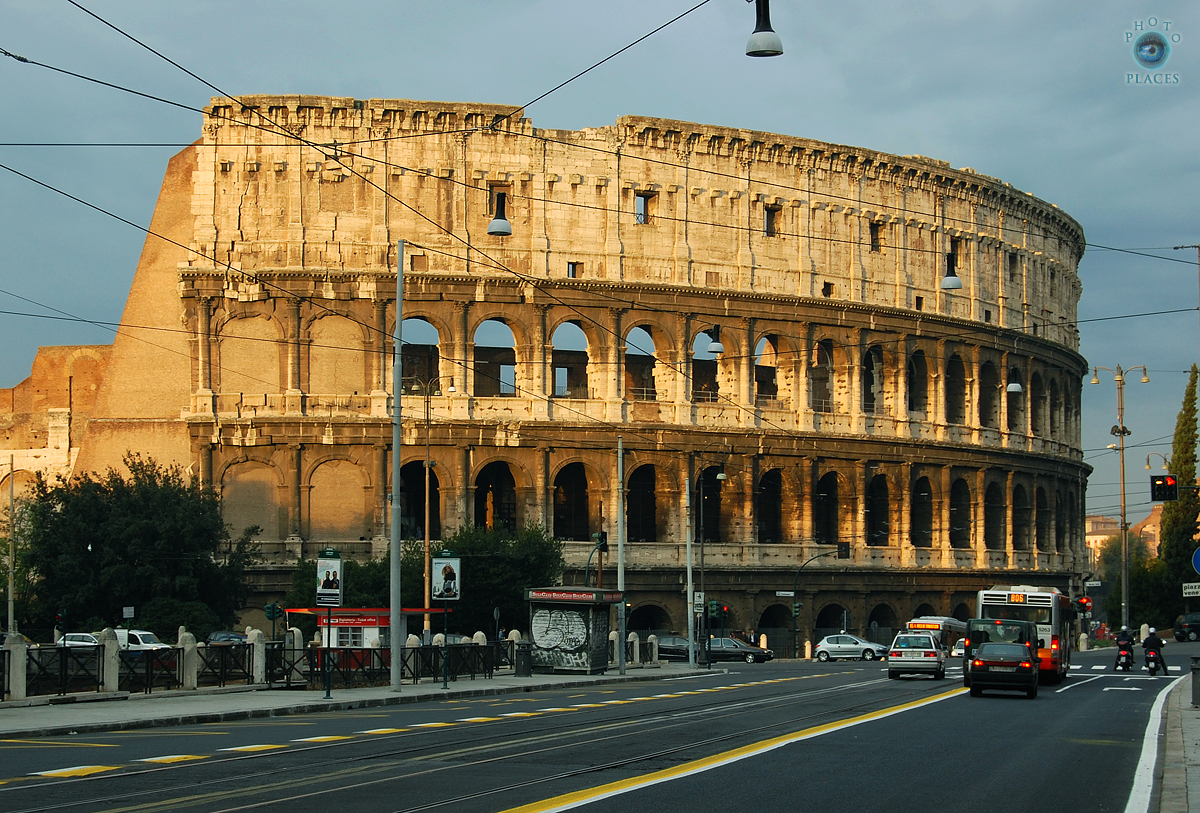
Largest amphiteatre in ancient world's history, and the largest still standing, as well as one of seven new wonders of the world, Colosseum is probably the most
MAIN FACTS
LOCATION Rome, Italy
ARCHITECTURE Ancient Roman, Tuscan, Ionic, Corinthian
BUILT 80 (AD)
ARCHITECT Unknown
AREA 2.4 ha
RATING (9,65/10)
recognizable symbol of Roman Empire and also a tourism symbol of modern Rome. 

Unlike Roman theatres that were built into hillsides, the Colosseum is an entirely free-standing structure. The Colosseum has suffered extensive damage over the centuries, with large segments having collapsed following earthquakes. The north side of the perimeter wall is still standing; the distinctive triangular brick wedges at each end are modern additions, having been constructed in the early 19th century to shore up the wall. The remainder of the present-day exterior of the Colosseum is in fact the original interior wall. 

The Colosseum's huge crowd capacity (50 000 - 80 000 people) made it essential that the venue could be filled or evacuated quickly. Its architects adopted solutions very similar to those used in modern stadia to deal with the same problem. The amphitheatre was ringed by eighty entrances at ground level, 76 of which were used by ordinary spectators. Each entrance and exit was numbered, as was each staircase. The northern main entrance was reserved for the Roman Emperor and his aides, whilst the other three axial entrances were most likely used by the elite. All four axial entrances were richly decorated with painted stucco reliefs, of which fragments survive. Many of the original outer entrances have disappeared with the collapse of the perimeter wall, but entrances XXIII (23) to LIIII (54) survive. 

The Colosseum was used to host gladiatorial shows as well as a variety of other events. The shows, called munera, were always given by private individuals rather than the state. They had a strong religious element but were also demonstrations of power and family prestige and were immensely popular. Another major attraction was the animal hunt, or venatio. This utilized a great variety of wild beasts, mainly imported from Africa and the Middle East, and included creatures such as rhinoceros, hippopotamuses, elephants, giraffes, aurochs, wisents, Barbary lions, panthers, leopards, bears, Caspian tigers, crocodiles and ostriches. Battles and hunts were often staged amid elaborate sets with movable trees and buildings. [Wikipedia]
BUY ROME COLOSSEUM FULL SIZE PHOTOS